Happy Valentine's Day from all of us at World Spice. We love spices every day, but for Valentine's Day, we really wanted to show it.
Everyone on our team has a favorite, and we’ve got the prose (and poetry!) to prove it.


Share this article



Related Posts

How-To: Tadka for Bengali Five Spice
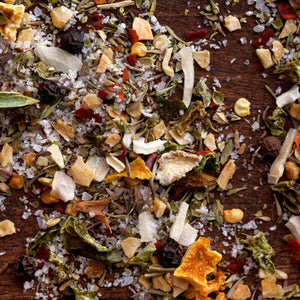
If you've ever seen a recipe that starts with "bloom the spices in hot oil," you've met a tadka. It sounds fancy. It isn't. It's one of the most useful techniques in the kitchen, and once it clicks, it becomes a skill you'll reach for instinctively. What's a tadka? A tadka (also called a tarka or chhaunk) is a foundational technique in South Asian cooking where whole, crushed, or ground spices are bloomed in hot oil or ghee, then poured directly over a dish to finish it. The heat extracts and transforms the flavors of each spice, pulling them into the oil and turning them fragrant and deep. Our Bengali Five Spice — five whole seeds, also known as Panch Phoron — is one of the classic blends for exactly this technique. Here's how: Heat a small pan over medium heat with a generous pour of oil or ghee. Watch for the shimmer — when the oil moves like water and catches the light, you're ready. Add a generous spoonful of Bengali Five Spice and stir gently but constantly. Wait for the sputter. When the seeds are dancing and fragrant, about 30 to 60 seconds, you're done. Pour the whole thing, oil and seeds, directly over your dish. What to put it on: Dal is the classic starting point. But a tadka will also transform potato dishes, chutneys, roasted vegetables, or a sturdy salad — think cauliflower with chickpeas, dressed warm or at room temperature. Anything that wants a nutty, earthy, aromatic note. Which turns out to be a lot of things. Try it this week. The whole technique takes about two minutes. Bengali Five Spice is part of our Spring Vault collection — available through May. Shop Bengali Five Spice
Learn more
Vanilla Cake You'll Remember
Valentine's Day doesn't have to be about romance. For me, it was a treasure hunt. Every Valentine's Day from the time I was very young, my mom would wake up early and hide clues around the house. Rhyming riddles that led from the bookshelf to the kitchen drawer to the woodpile. One year, each clue came with a puzzle piece and we had to put the whole thing together to find the final hiding spot. The prize was always the same: vanilla cake with cherry buttercream frosting, sometimes as cupcakes, sometimes as a whole cake. It was the kind of childhood tradition that made the world feel like magic. I think about that now as an adult—how much effort and love went into making that tradition happen every single year. The planning, the early morning baking, the care in every hand-written rhyme. It's one of the best memories I have of what love looks like. And the taste of this cake brings me back to that feeling every time. I'd like to share this special recipe with you. It's simple, it's delicious, and it works just as well as a layer cake or cupcakes. Make it for someone you love. Vanilla Cake You'll Remember Serves 10+ | 350°F Cake 1 cup butter 1½ cups sugar ½ teaspoon salt 1½ teaspoons vanilla 4 eggs 3 cups cake flour 3 teaspoons baking powder 1 cup milk Cream butter, 1½ cups of the sugar, salt, and vanilla well. Add eggs one at a time and beat well. Sift the flour and baking powder together several times. Add the dry mixture with the milk in alternating portions to the creamed blend. Beat smooth. Pour batter into 2 9-inch layer pans and bake about 35 minutes. Cool on racks. For cupcakes: Bake about 25 minutes. Frosting (for a 2-layer cake) ½ cup soft butter 3 cups confectioner's sugar ¼ teaspoon salt 3 tablespoons cream 1½ teaspoon vanilla Cream butter until fluffy. Gradually beat in confectioner's sugar, salt, cream, and vanilla. For cherry frosting: Add cherry flavoring to taste. I love adding different spice blends to this recipe depending on the occasion. My favorites are Advieh for warm, floral notes, and Kashmiri Garam Masala for intense, deeply spiced flavors. To add a spice blend, stir a tablespoon into the batter along with the flour mixture, and leave the frosting plain.
Learn more
Perfect Pepper: Understanding Grind Size
Does the coarseness of the pepper really make a difference? While pepper is still pepper no matter how you grind it, there are some interesting nuances to how grind size can affect your cooking. Let’s look at a few examples. Fine Grind When pepper is ground finely it covers more area and tastes hotter. If you’re looking to get maximum spiciness out of your peppercorns go for a fine grind and a lot of it. Finely ground pepper also dissolves the most easily into a dish, so if you want peppercorn flavor with no noticeable texture — say in a creamy soup or smooth mashed potatoes — a fine grind is your best option. Medium Grind Also known as “Table Grind,” this is the size you’re most likely to find in pepper shakers or grinders on a restaurant table. There's a good reason for this. A medium grind is the best choice for adding to food at the table. It has a little texture and crunch, a medium heat level, and is all around great for use as a condiment. Coarse Grind While fine ground pepper brings even, intense heat, coarse ground brings the fireworks. Large chunky pieces create bursts of texture and intense peppercorn flavor that make dishes exciting and engaging. A coarse grind works great for steaks, salad dressings, and pasta dishes like cacio e pepe. A coarse grind is also ideal for adding as a decorative finishing sprinkle. Whole Peppercorns Whole peppercorns are best suited for infusing their flavors over a long period of time. Add them to soups, stews, broths, and pickle brines, but remember with a longer infusion they can really pack a punch, so start with just a few.
Learn more